Poets
Poets weave emotions with eloquent words
70 Poets
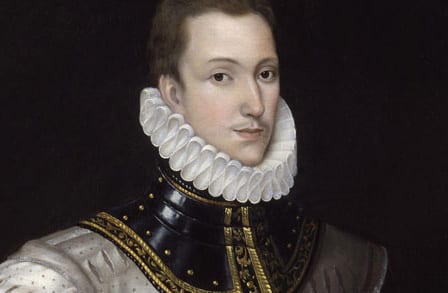
Philp Sidney
Sir Philip Sidney (born November 30, 1554, Penshurst, Kent, England—died October 17, 1586, Arnhem, Netherlands) Elizabethan courtier, statesman, soldier, poet, and patron of scholars and poets, considered the ideal gentleman of his day. After Shakespeare’s sonnets, Sidney’s Astrophel and Stella is considered the finest Elizabethan sonnet cycle. His The Defence of Poesie introduced the critical ideas of Renaissance theorists to England. He was buried at St. Paul’s Cathedral in London on February 16, 1587, with an elaborate funeral of a type usually reserved for great noblemen. The Universities of Oxford and Cambridge and scholars throughout Europe issued memorial volumes in his honour, while almost every English poet composed verses in his praise. He won this adulation even though he had accomplished no action of consequence; it would be possible to write a history of Elizabethan political and military affairs without so much as mentioning his name. It is not what he did but what he was that made him so widely admired: the embodiment of the Elizabethan ideal of gentlemanly virtue.
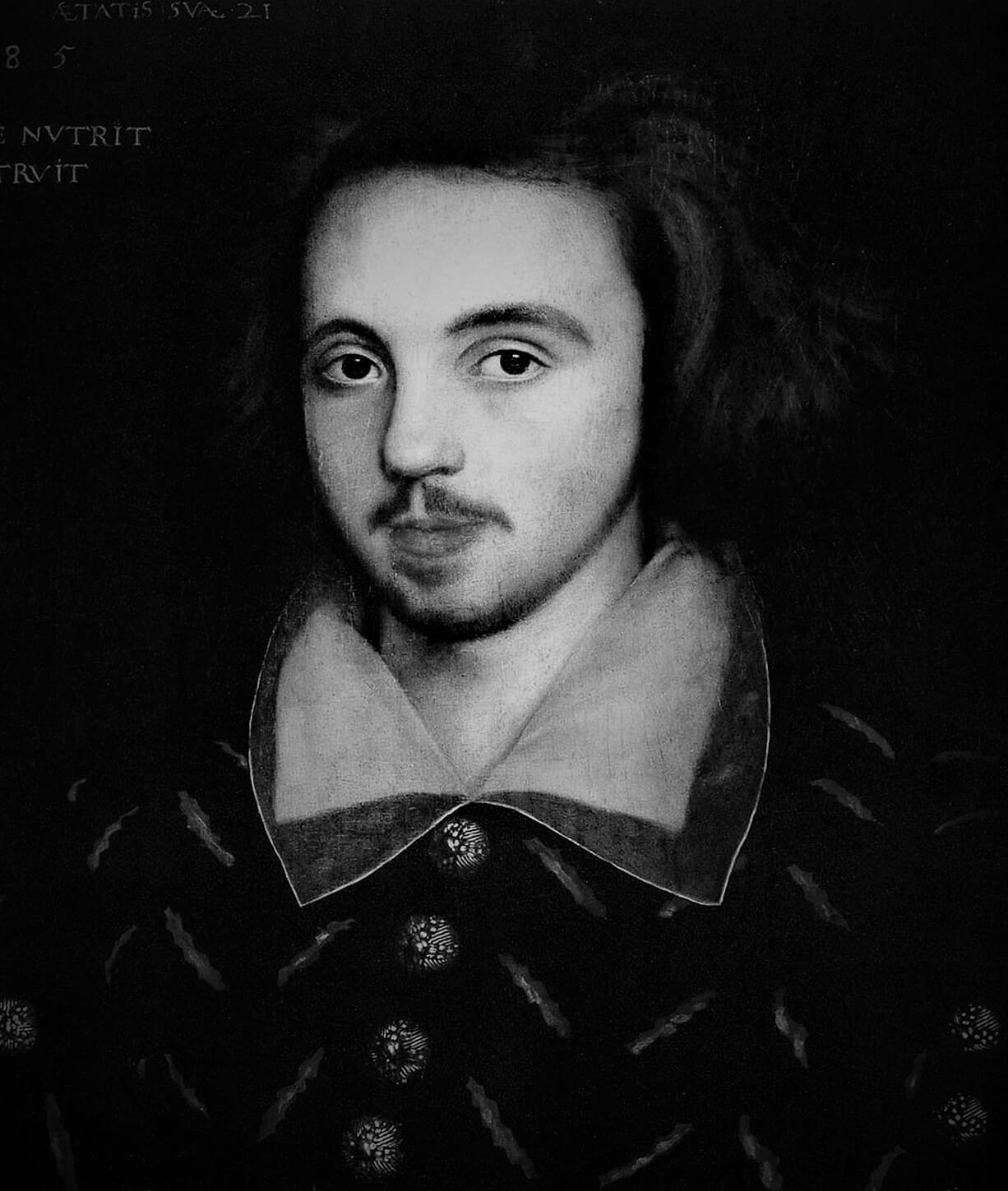
Christopher Marlowe
Christopher Marlowe, (baptized Feb. 26, 1564, Canterbury, Kent, Eng.—died May 30, 1593, Deptford, near London), Elizabethan poet and Shakespeare’s most important predecessor in English drama, who is noted especially for his establishment of dramatic blank verse. Christopher Marlowe was an Elizabethan poet and William Shakespeare’s most important predecessor in English drama. He is noted especially for his establishment of dramatic blank verse. In a playwriting career that spanned little more than six years, Marlowe’s achievements were diverse and splendid. On May 30, 1593, Christopher Marlowe was killed by Ingram Frizer, in the dubious company of Nicholas Skeres and Robert Poley, at a lodging house in Deptford, outside London, where they had spent most of the day and where, it was alleged, a fight had broken out between them over the bill.
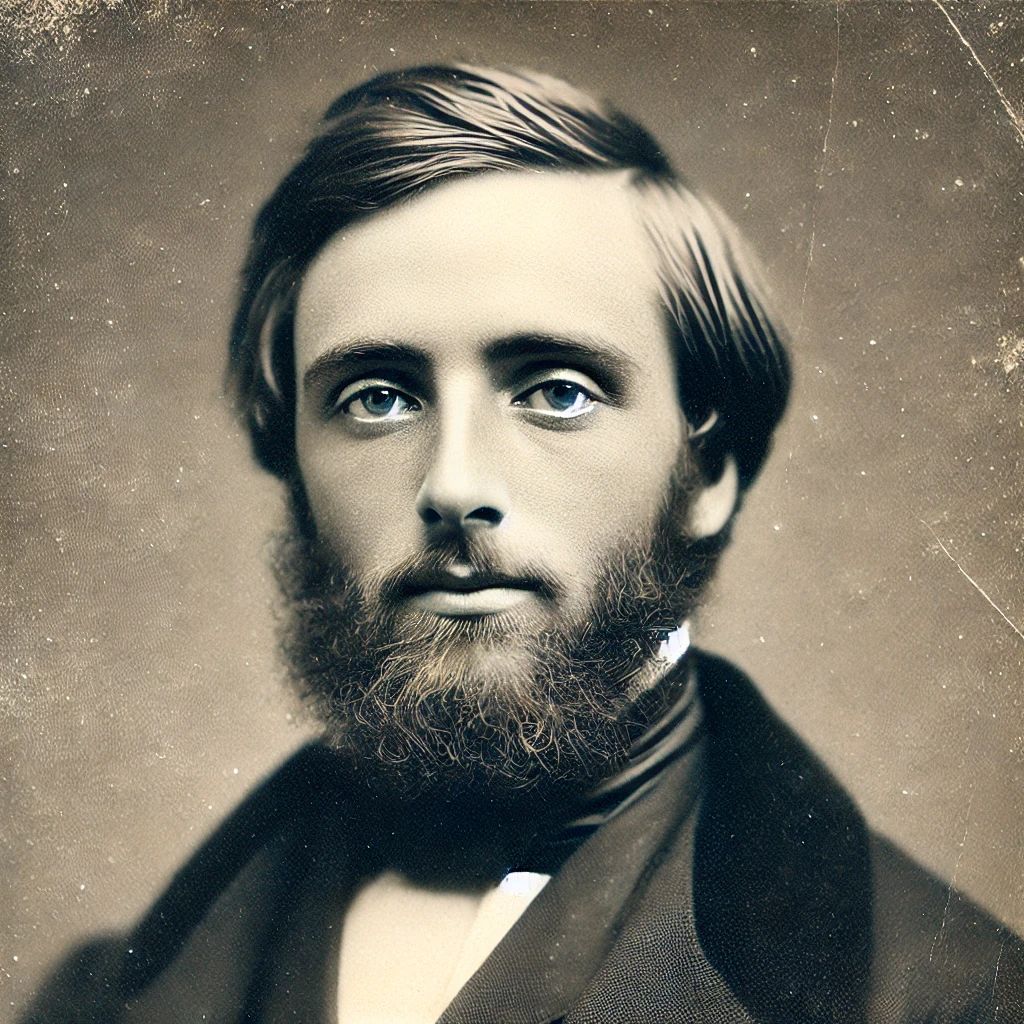
Robert Browning
Robert Browning (born May 7, 1812, London—died Dec. 12, 1889, Venice) major English poet of the Victorian age, noted for his mastery of dramatic monologue and psychological portraiture. His most noted work was The Ring and the Book (1868–69), the story of a Roman murder trial in 12 books. Through all the vicissitudes of critical reputation, however, Browning’s major contribution to the canon of children’s literature, “The Pied Piper of Hamelin,” has retained its popular audience. At the time of his death in 1889, he was one of the most popular poets in England.
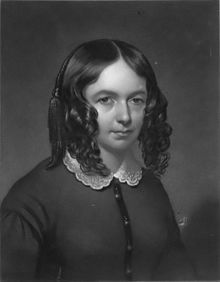
Elizabeth Barrett Browning
Elizabeth Barrett Browning (born March 6, 1806, near Durham, Durham county, England—died June 29, 1861, Florence, Italy) English poet whose reputation rests chiefly upon her love poems, Sonnets from the Portuguese and Aurora Leigh, the latter now considered an early feminist text. Her husband was Robert Browning. Political and social themes embody Elizabeth’s later work. She expressed her intense sympathy for the struggle for the unification of Italy in Casa Guidi Windows (1848–51) and Poems Before Congress (1860). In 1857 Browning published her verse novel Aurora Leigh, which portrays male domination of a woman. In her poetry she also addressed the oppression of the Italians by the Austrians, the child labor mines and mills of England, and slavery, among other social injustices. Although this decreased her popularity, Elizabeth was heard and recognized around Europe. Elizabeth Barrett Browning died in Florence on June 29, 1861.
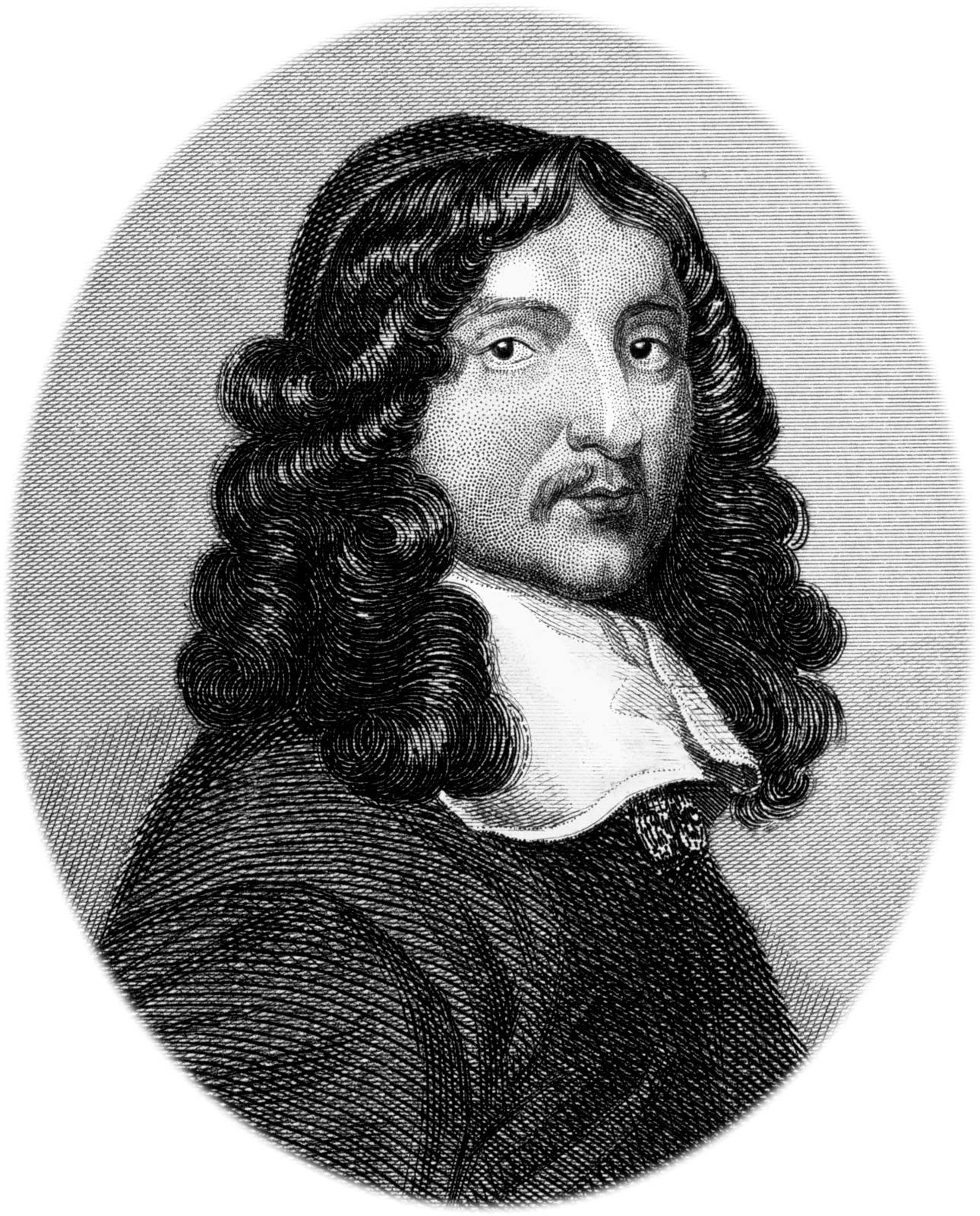
Andrew Marvell
Andrew Marvell, (born March 31, 1621, Winestead, Yorkshire, England—died August 18, 1678, London), English poet whose political reputation overshadowed that of his poetry until the 20th century. He is now considered to be one of the best Metaphysical poets. Marvell spent most of the 1650s working as a tutor, first for Mary Fairfax, daughter of a retired Cromwellian general, then for one of Oliver Cromwell’s wards. Scholars believe that Marvell’s greatest lyrics were written during this time. In 1657, due to John Milton’s efforts on his behalf, Marvell was appointed Milton’s Latin secretary, a post Marvell held until his election to Parliament in 1660.
Edmund Spenser
Edmund Spenser (born 1552/53, London, England—died January 13, 1599, London) English poet whose long allegorical poem The Faerie Queene is one of the greatest in the English language. It was written in what came to be called the Spenserian stanza. In 1598 rebels attacked and burned Kilcolman Castle, forcing Spenser and his family to flee to Cork. In December he returned to England, where he delivered a report on the Irish crisis at Whitehall on Christmas Eve. Three weeks later, on 13 January 1599, he died, perhaps of illness brought on by exhaustion. He was buried soon after in the south transept of Westminster Abbey in the Poets’ Corner.
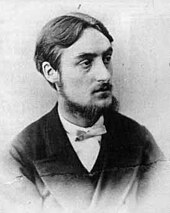
Gerard Manley Hopkins
Gerard Manley Hopkins, (born July 28, 1844, Stratford, Essex, Eng.—died June 8, 1889, Dublin), English poet and Jesuit priest, one of the most individual of Victorian writers. His work was not published in collected form until 1918, but it influenced many leading 20th-century poets. to developing new rhythmic effects, Hopkins was also very interested in ways of rejuvenating poetic language. He regularly placed familiar words into new and surprising contexts. He also often employed compound and unusual word combinations. As he wrote to in a letter to Bridges, “No doubt, my poetry errs on the side of oddness…”
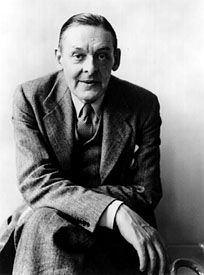
Thomas Stearns Eliot
T.S. Eliot (born September 26, 1888, St. Louis, Missouri, U.S.—died January 4, 1965, London, England) American-English poet, playwright, literary critic, and editor, a leader of the Modernist movement in poetry in such works as The Waste Land (1922) and Four Quartets (1943). Eliot exercised a strong influence on Anglo-American culture from the 1920s until late in the century. His experiments in diction, style, and versification revitalized English poetry, and in a series of critical essays he shattered old orthodoxies and erected new ones. The publication of Four Quartets led to his recognition as the greatest living English poet and man of letters, and in 1948 he was awarded both the Order of Merit and the Nobel Prize for Literature. Eliot advocates a traditionalism in religion, society, and literature that seems at odds with his pioneer activity as a poet. But although the Eliot of Notes towards the Definition of Culture (1948) is an older man than the poet of The Waste Land, it should not be forgotten that for Eliot tradition is a living organism comprising past and present in constant mutual interaction.
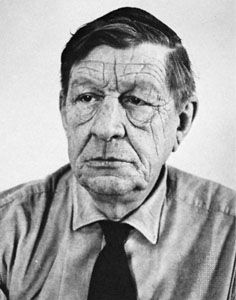
Wystan Hugh Auden
W. H. Auden (born February 21, 1907, York, Yorkshire, England—died September 29, 1973, Vienna, Austria) English-born poet and man of letters who achieved early fame in the 1930s as a hero of the left during the Great Depression. Most of his verse dramas of this period were written in collaboration with Christopher Isherwood. In 1939 Auden settled in the United States, becoming a U.S. citizen. W. H. Auden served as a Chancellor of the Academy of American Poets from 1954 to 1973, and divided most of the second half of his life between residences in New York City and Austria. He died in Vienna on September 29, 1973.
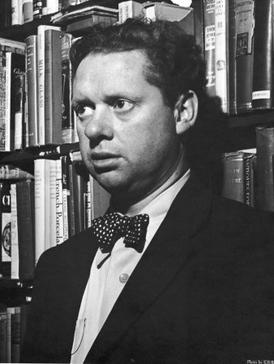
Dylan Thomas
Dylan Thomas (born October 27, 1914, Swansea, Glamorgan [now in Swansea], Wales—died November 9, 1953, New York, New York, U.S.) Welsh poet and prose writer whose work is known for its comic exuberance, rhapsodic lilt, and pathos. His personal life, punctuated by reckless bouts of drinking, was notorious. Thomas spent his childhood in southwestern Wales. His father taught English at the Swansea grammar school, which in due course the boy attended. Because Dylan’s mother was a farmer’s daughter, he had a country home he could go to when on holiday. His poem “Fern Hill” (1946) describes its joys.
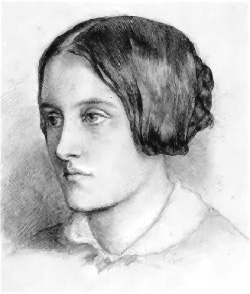
Christina Rossetti
Poet Christina Rossetti was born in 1830, the youngest child in an extraordinarily gifted family. Her father, the Italian poet and political exile Gabriele Rossetti, immigrated to England in 1824 and established a career as a Dante scholar and teacher of Italian in London. Rossetti’s poetry has never disappeared from view. Critical interest in Rossetti’s poetry swelled in the final decades of the twentieth century, a resurgence largely impelled by the emergence of feminist criticism; much of this commentary focuses on gender issues in her poetry and on Rossetti as a woman poet. Critics continue to study Rossetti’s response to and influence in a women writers’ tradition; also under discussion are gender-conscious models for positioning Rossetti in the mainstream (that is, predominantly male) canon. Christina Rossetti has often been called the greatest Victorian woman poet, but her poetry is increasingly being recognized as among the most beautiful and innovative of the period by either sex.
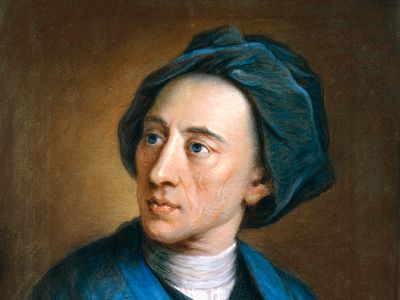
Alexander Pope
Alexander Pope, (born May 21, 1688, London, England—died May 30, 1744, Twickenham, near London), poet and satirist of the English Augustan period, best known for his poems An Essay on Criticism (1711), The Rape of the Lock (1712–14), The Dunciad (1728), and An Essay on Man (1733–34). He is one of the most epigrammatic of all English authors. Pope’s command of diction is no less happily adapted to his theme and to the type of poem, and the range of his imagery is remarkably wide. He has been thought defective in imaginative power, but this opinion cannot be sustained in view of the invention and organizing ability shown notably in The Rape of the Lock and The Dunciad. He was the first English poet to enjoy contemporary fame in France and Italy and throughout the European continent and to see translations of his poems into modern as well as ancient languages.